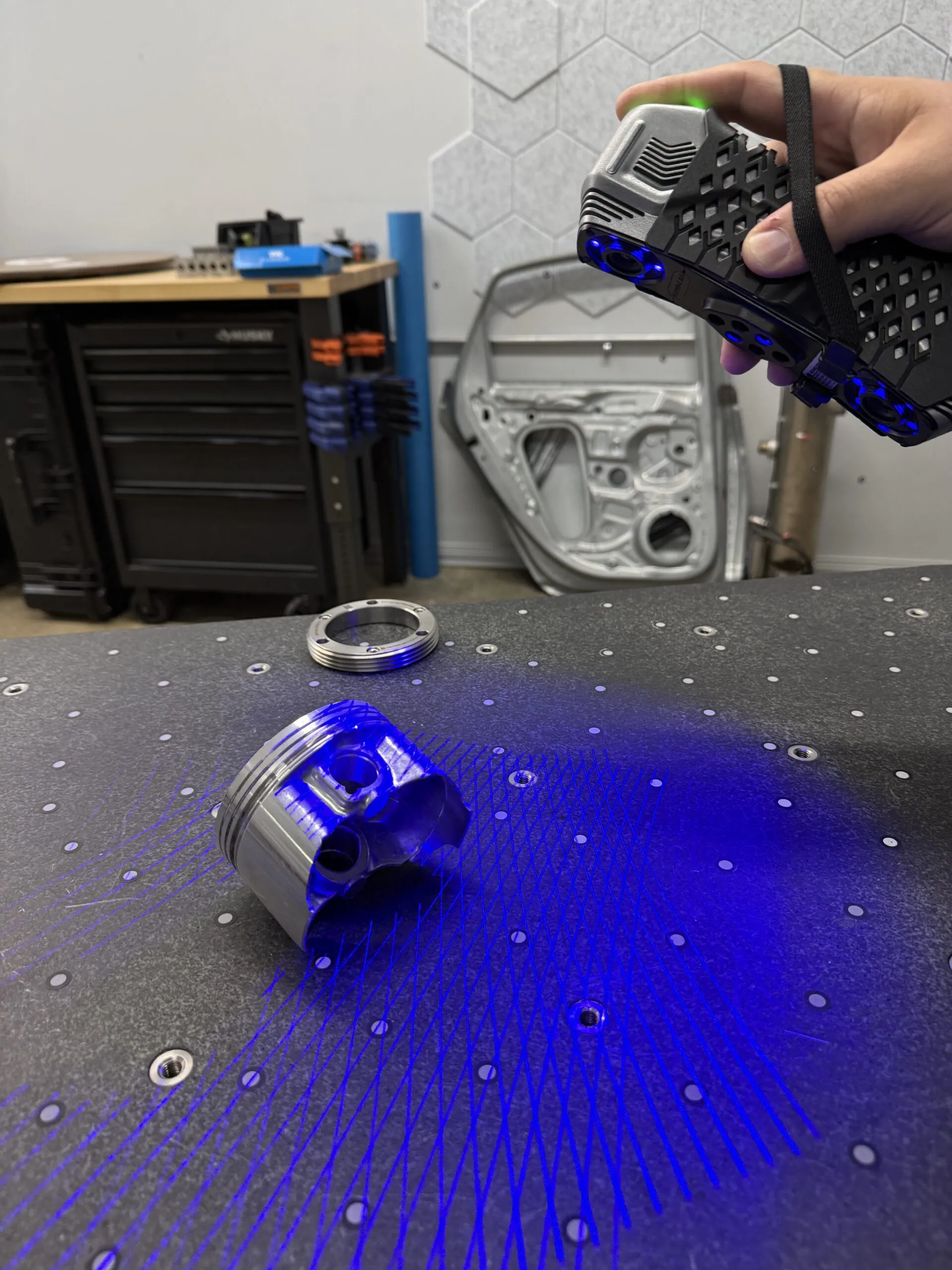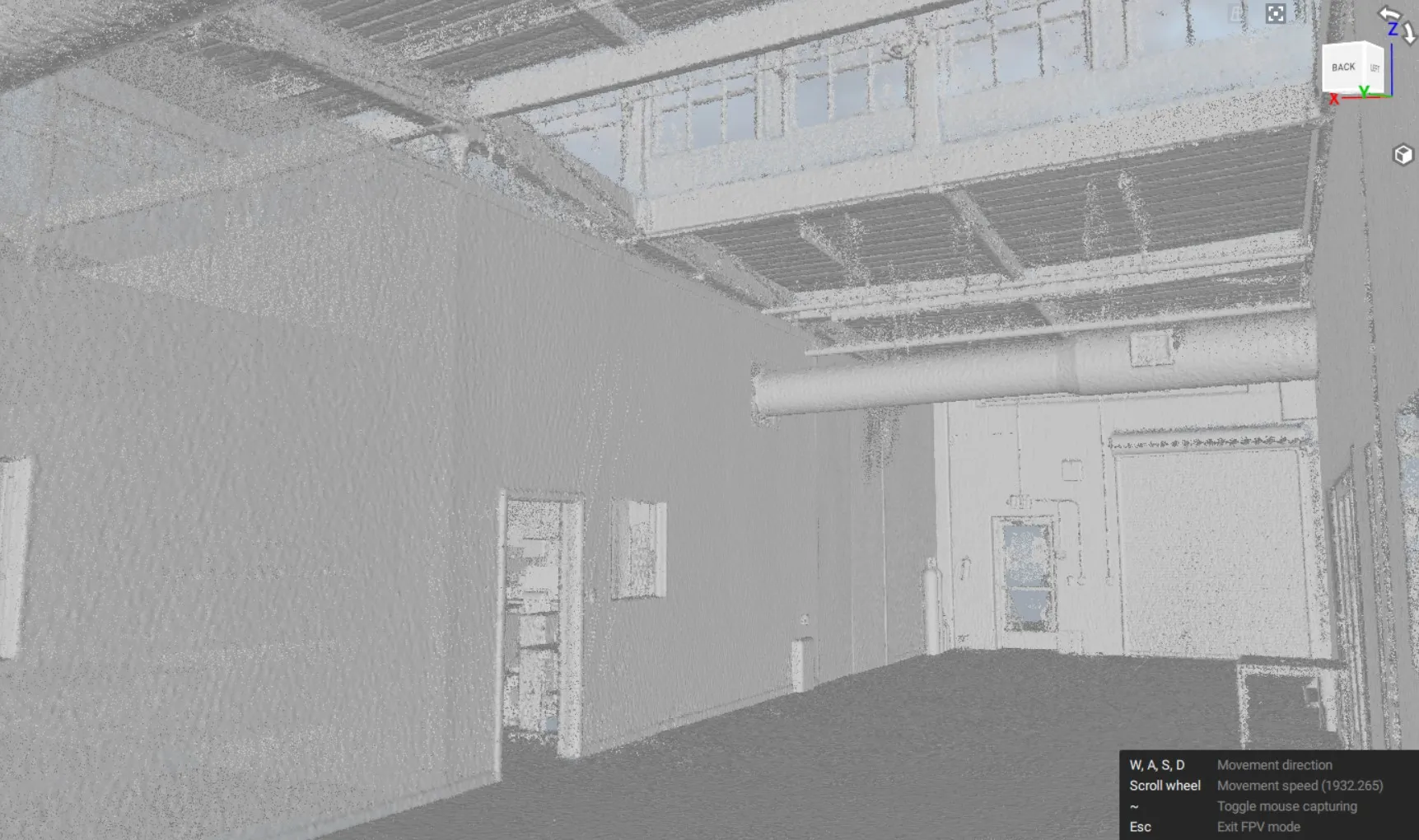

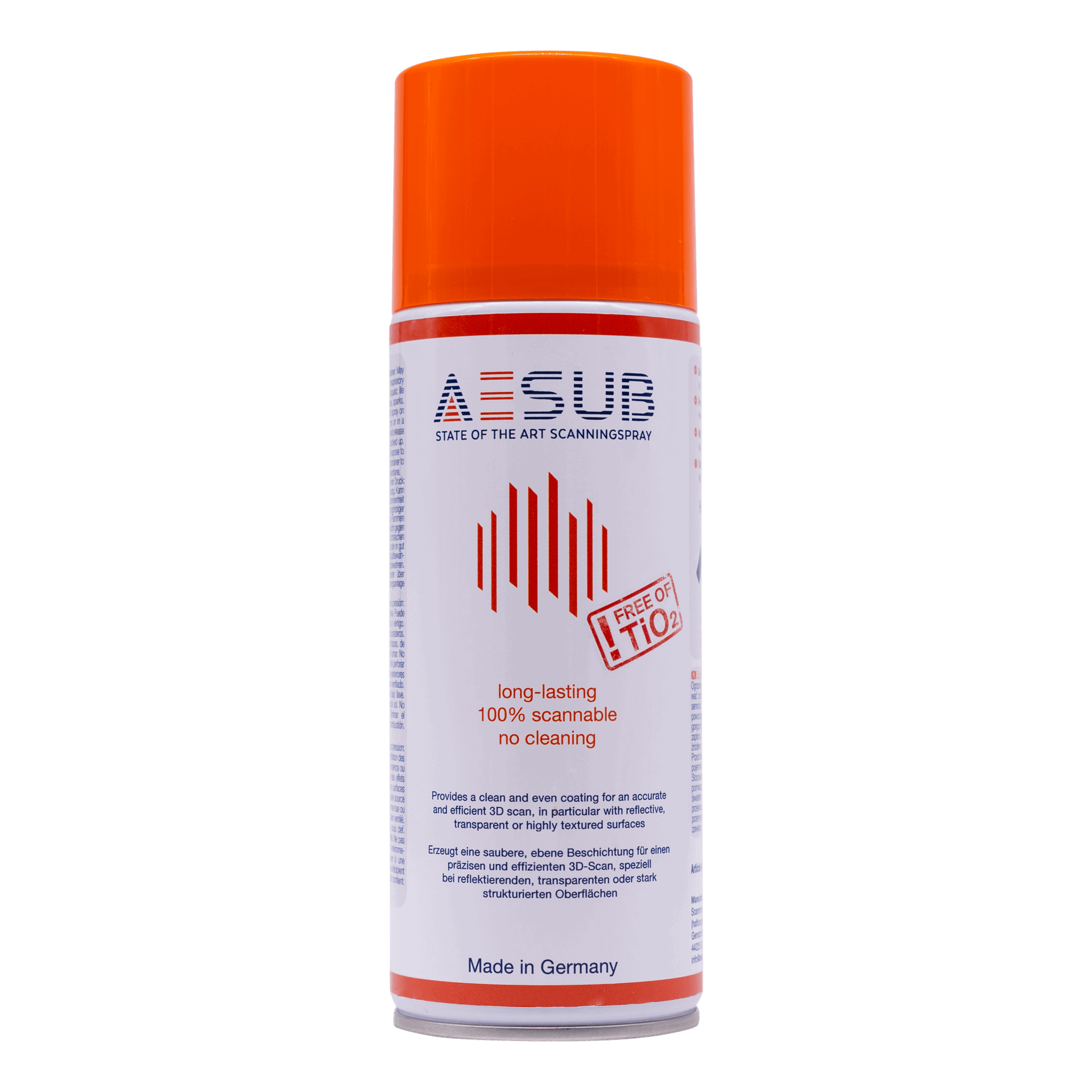
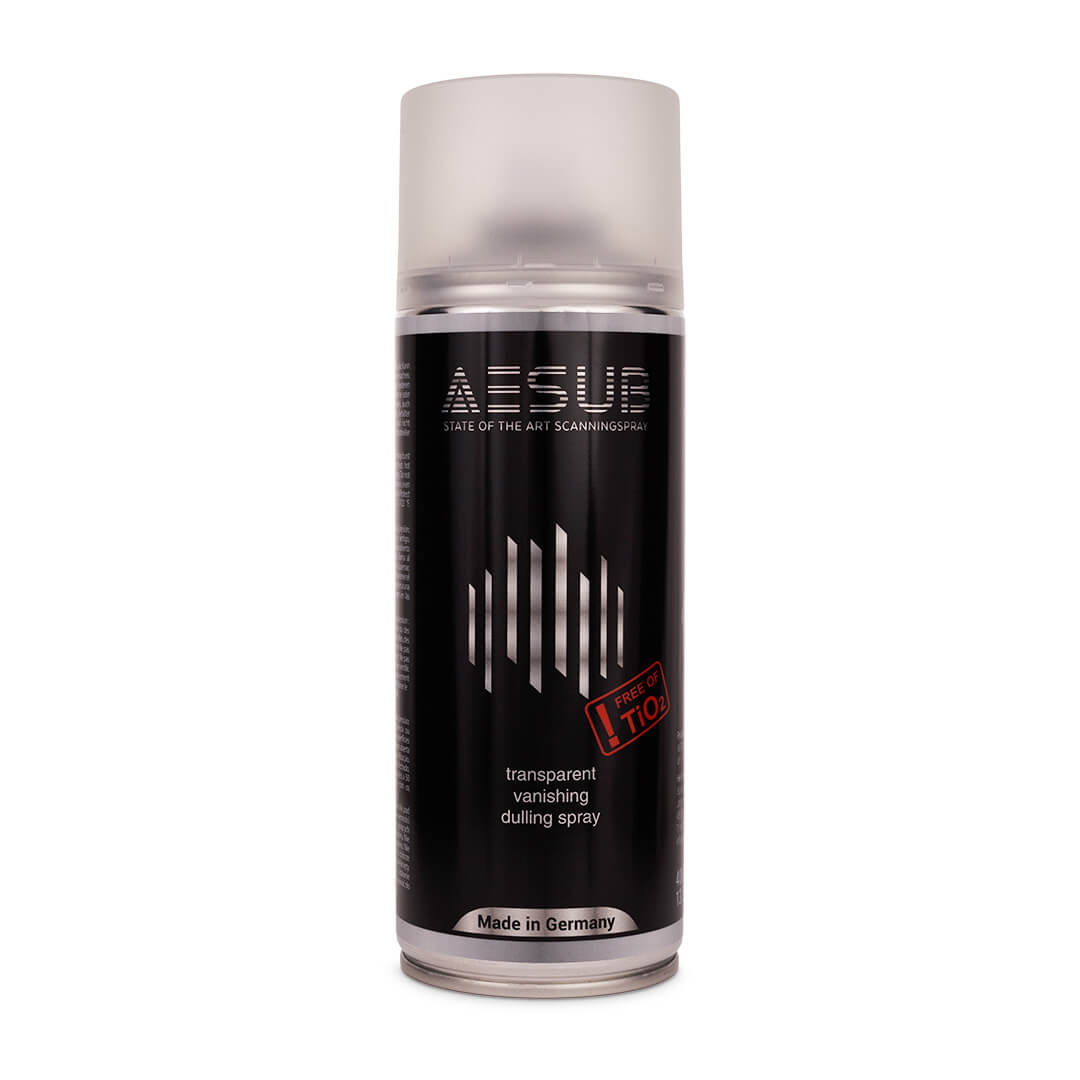
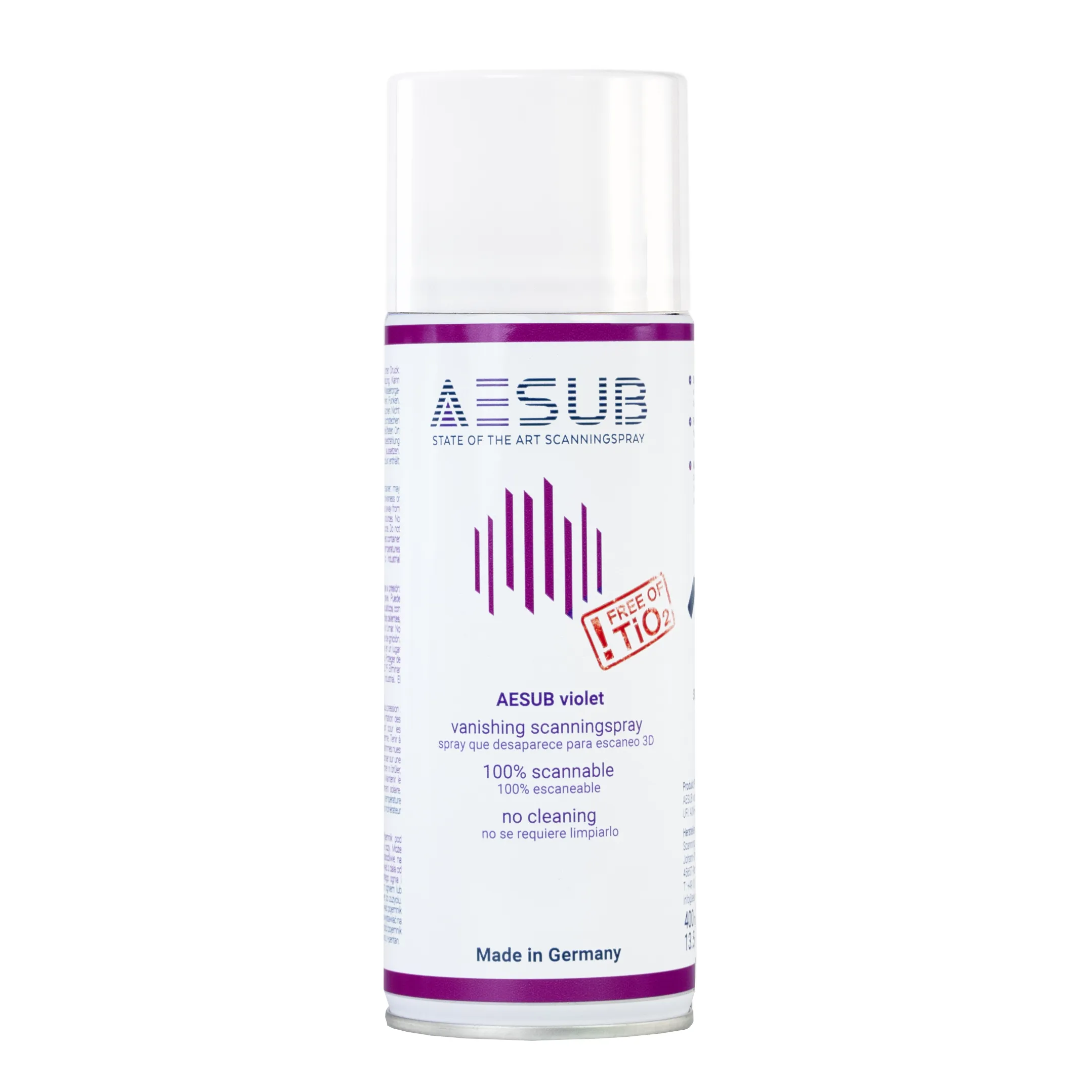



Optical 3D scanners read light bouncing back off a surface. Shiny, dark and transparent surfaces either scatter that light or swallow it, so the scanner returns holes, noise, or nothing usable at all.
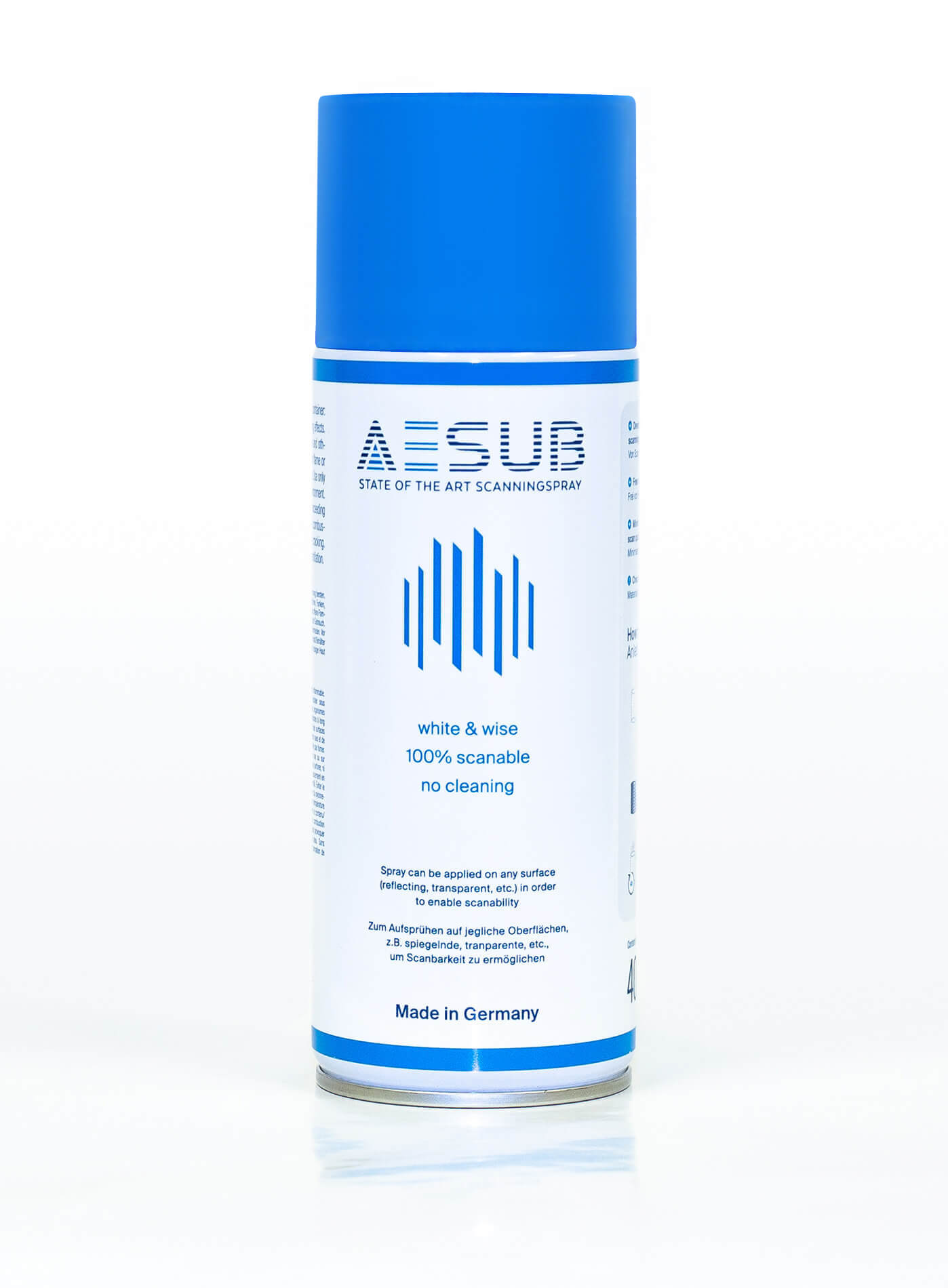
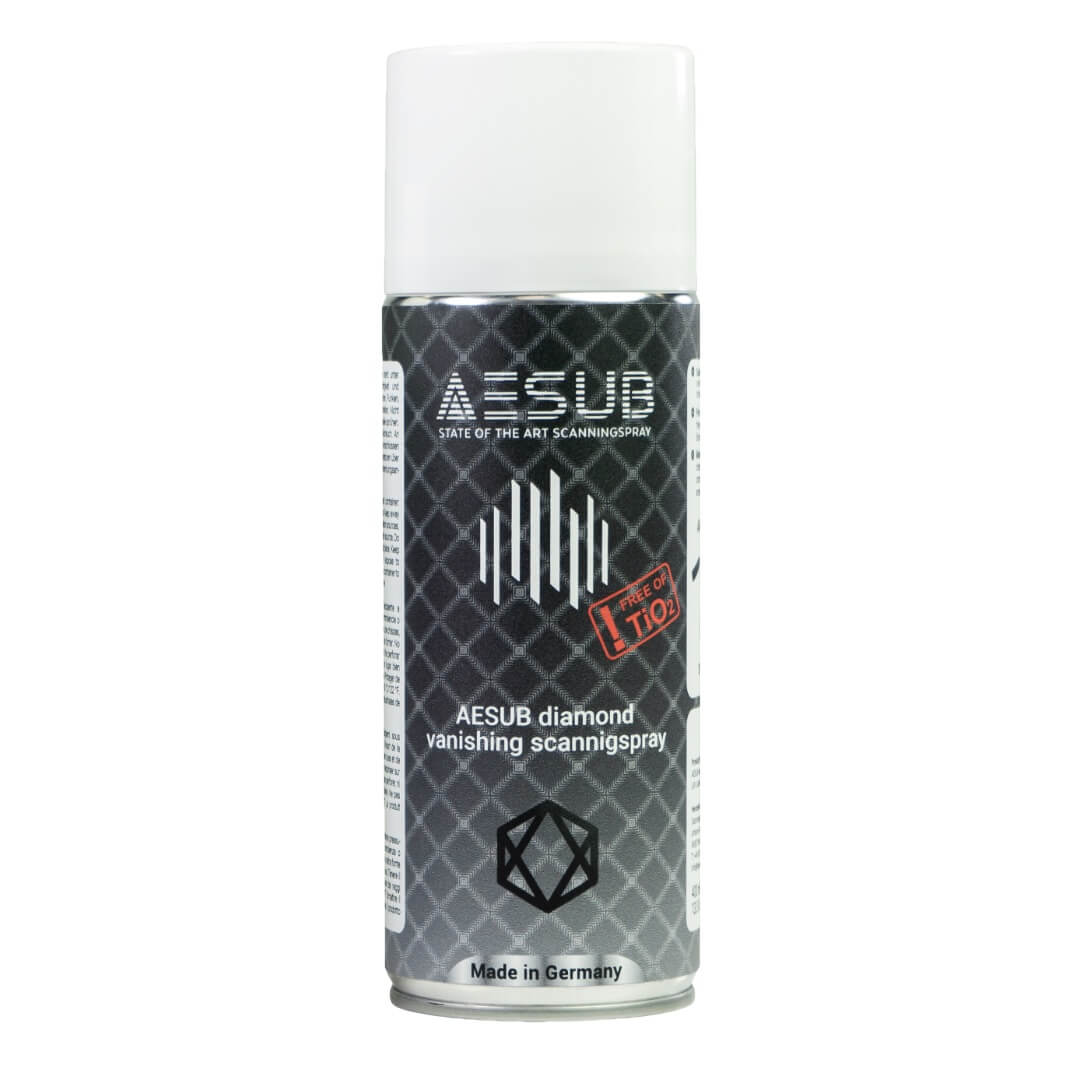
A thin matting coat gives the scanner a consistent surface to read. It usually turns a frustrating, repeated scan into a clean one on the first pass.